

Highlight of the Birds of Siberian & Gobi
Next, we venture deep into the Gobi Desert, visiting the famous Flaming Cliffs (rich with dinosaur fossils) and searching for rare desert birds, with opportunities for camel rides, trekking, and experiencing the towering Khongor sand dunes.
The final chapter brings us to the Altai Mountains – home to sought-after upland species such as Altai Snowcock and Hodgson’s Bushchat – set against a stunning backdrop of snow-capped peaks, glacial valleys, and nomadic culture.
Throughout the trip we focus on the peak of grouse displays and spring migration, staying in a mix of comfortable gers and expedition tents while enjoying warm Mongolian hospitality. A true celebration of Mongolia’s wild beauty, rich avifauna, dramatic landscapes, and cultural heritage.

HIGHLIGHTS
The incredibly scenic Gobi desert, Altai Mountain range, Siberian boreal forest
This trip will give you a chance to exploring most exotic avifauna of Mongolia.
Exotic mammals including flock of endangered Mongolian gazelle, extinct Przewalski’s horse , Corsac Fox, Ibex and Argali Sheep.
Make a life-long friend and expand your horizons!
Tour Itinerary
Day 1. Arrive in Ulaanbaatar
We will pick you up at the International airport after your arrival in Ulaanbaatar which is the capital of Mongolia and check in a hotel. Have a WELCOME DINNER in the Ulaanbaatar. First birding area is along Tuul river valley with riparian forest. Search target species such as Amur falcon, White-crowned Penduline Tit, Azure tit, Azure magpie.
Day 2-3. Terelj National Park
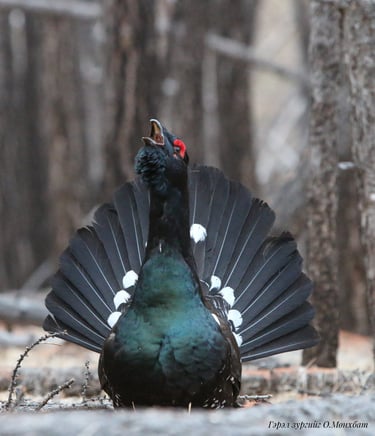
Early in the morning, we will drive to the east Siberian boreal forest in Terelj National Park. Embark on our adventure starting at Terelj National Park, nestled in the Khenti Mountains, delineating the southern edge of the Siberian taiga. The Khenti mountain range showcases breathtaking natural landscapes, including dense coniferous and mixed forests, reticulate and willow swamps, with an average elevation of 1200 meters above sea level. Venturing along the coniferous forest’s edge, our main targets include the displaying Blackbilled Capercaillie, Hazel Grouse, Pine Bunting, Siberian Rubythroat, Olive-backed Pipit, and Chinese Bush Warbler. We’ll dedicate two days to birding in the Siberian forest. On the southern edge of the Khentii mountain range, we’ll encounter the elusive Japanese Quail, known for leading an extremely secretive life.
Day 4. Kustai National Park
Early morning we drive to Khustai NP, the land of the reintroduced Takhi or Przewalski’s Wild Horse (Equus przewalskii). Along with other interesting mammals such as Ground squirrels and Siberian marmots, Mongolian gazelle, Argali sheep, watch the fascinating birdlife including Daurian Partridge, Golden Eagle. After lunch we will drive to Kharakorum where is the sites of this ancient buddist monastery Erdenezuu with their 108 stupas are undoubtedly at great interest to travelers. The main target is to observing group of Demoiselle crane on the wetland. On the way we will make plenty of stops on Erdenesant rocky mountains for watching other target species such as nesting Saker falcon and Upland Buzzard, Rufous-backed Rock thrush, Cenirous vulture, Pied Wheatear.
Day 5. Khar Khorin sanctuary and Erdenezuu monastry
Early morning we drive to Kharakorum village where is the sites of this ancient buddist monastery Erdenezuu with their 108 stupas are undoubtedly at great interest to travelers. Erdenezuu Monastery was built on the site of the old Mongolian capital Kharakhorum using some of the building materials of the ruined city and is the oldest, as well as the largest Buddhist monastery in Mongolia. Khalkha Mongolian ruler Abtai Sain Khan, a descendant of Genghis Khan’s golden generation and grandfather of Zanabazar - the first Jebtsundamba Khutuktu, ordered the construction of the Erdenezuu Monastery in 1585 after he visited Tibet to meet with the 3rd Dalai Lama.
Day 5. Tohom Lake & Khongor Sand Dune
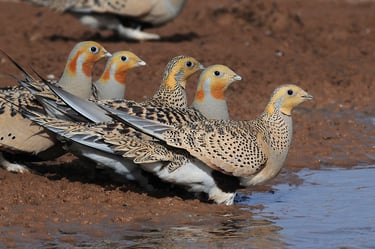
After breakfast, we’ll drive west to Tohom Lake through the desert steppe. Keep an eye out for Pallas’s Sandgrouse, Mongolian Finch, and Pallas’s and Common Reed Buntings along the way. Lunch will be by the shores of Tohom Lake, a large salty lake. Afterward, we’ll head to the Khongor Sand Dunes, spotting Henderson Ground Jays among the bushes on route.
Day 6. Ongi Monastry
Nestling on the south and north banks of the Ongi River bend, Ongi was one of the historical ancient monasteries in the Gobi desert - consisted of two separate monasteries connected by a bridge. On the southern river bank was 320 years old Hutagt Monastery comprised of 9 main temples, plus small temples and stupas. The monastery had 4 religious institutions and housed by over 1000 monks at its height. Unfortunately, no temple remained after the 1930s communist purge except for a stupa. The location of the monastery is spectacular among the Gobi desert mountains, a halfway to break the trip for an overnight between the two major travel destinations of the Gobi desert and Kharakhorin. We will see some interesting desert species such as; Chukar, Isabelline wheatear, Lesser Kestrel, Mongolian Finch.
Day 7. Bayanzag (Flaming Cliffs)
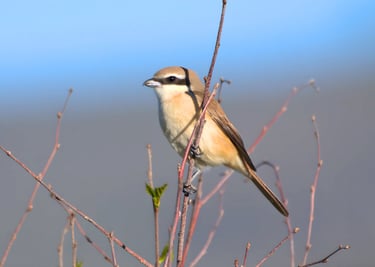
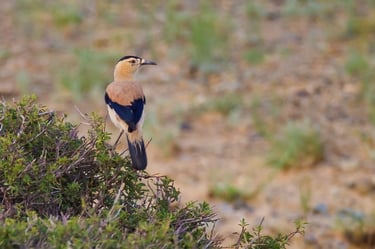
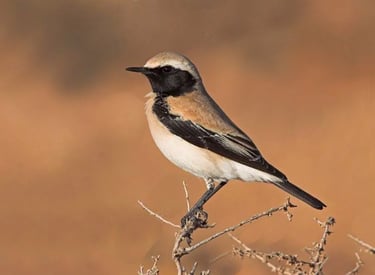
Dinosaur eggs were first discovered in this area in the 1920s, and a fossil of a Protoceratops and a Velociraptor locked in a fight were unearthed in the 1970s. To date, paleontologists are finding important fossils in the surrounding area. Bayanzag is a must see place for world travelers. Wandering around paleontological rich Flaming Cliffs, look for the fragments of the dinosaur bones buried by the dust. Take bird-eye views from the top of the highest cliffs. In the evening, these desert cliffs glow with a fiery red light that seems to mimic the radiance of the setting sun. Target species; Long-legged Buzzard, Lesser Kestrel, Pallas’s Sandgrouse, Hill Pigeon, Great Grey Shrike, Henderson’s Ground Jay, Crested Lark, Asian Desert Warbler and Desert Wheatear.
Day 8. Khongor Sand Dune
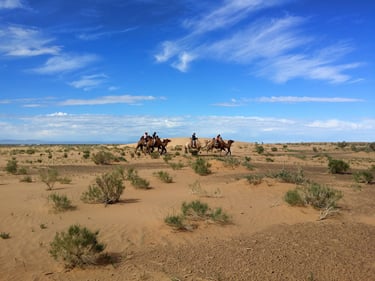
After breakfast, we’ll drive west to Tohom Lake through the desert steppe. Keep an eye out for Pallas’s Sandgrouse, Mongolian Finch, and Pallas’s and Common Reed Buntings along the way. Lunch will be by the shores of Tohom Lake, a large salty lake. Afterward, we’ll head to the Khongor Sand Dunes, spotting Henderson Ground Jay among the bushes en route. Staying in the wilderness, with no man-made objects as far as the eye can see, makes you forget about your daily life. You can feel the nature of Mongolia by taking a leisurely stroll through the dunes and gazing at the starry sky at night. Camel Trekking in the Gobi is an adventure true to local traditions, a great option if you are looking for experiential travel. It combines cultural and landscape experience with a very special way of adventure travel.
Day 9. Gobi Gurvan Saikhan NP, Yol valley
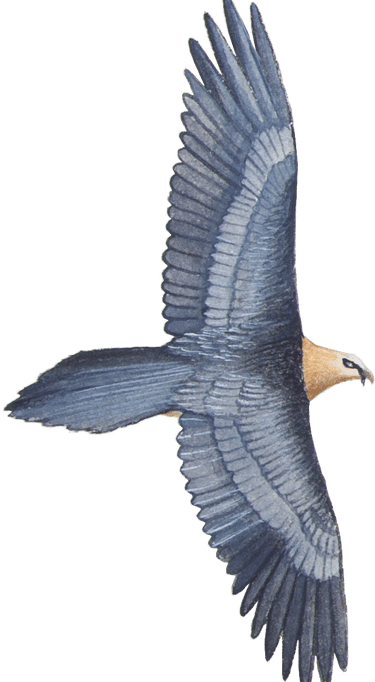
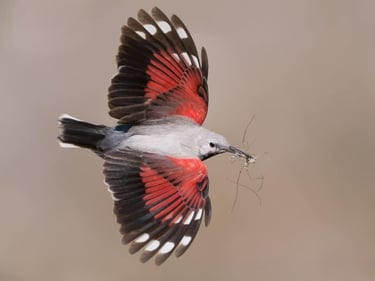
Following breakfast, our journey continues as we head towards the southern region of the Gobi Desert, specifically Gurvan Saikhan, a part of the Gobi Altai Mountain range. Here, amidst the rugged terrain, we’ll have the opportunity to spot a diverse array of bird species including the Crag Martin, White-winged Snowfinch, Kozlov’s Accentor, Mongolian Finch, Black Redstart, nesting Saker Falcon, Lammergeier, Beautiful Rosefinch, and Godlewski’s and Grey-necked Bunting. In the picturesque Yol valley, keep an eye out for the elusive Wallcreeper, adding to the richness of our birdwatching adventure.
Day 10. Baga Gazrin Chuluu Nature Reserve
Venture into the renowned archelogy rich destination to trick the immense rocky outcrops which is featured the bygone petroglyphs, burial mounds and monuments, caves and deer stones. This place is also famous for the healthy population Argali Wild Sheep. We will see; nesting Cinereous vulture, Black Kite, Long-legged Buzzard, Lesser Kestrel, Pallas’s Sandgrouse, Hill Pigeon, Little Owl, Great Grey Shrike, Asian Desert Warbler, Desert Wheatear.
Day 11. Return to Ulaanbaatar
After breakfast, we’ll set out on a scenic drive towards Arvikheer Town. Along the way, our eyes will be peeled for magnificent raptors soaring overhead, including the awe-inspiring Cinereous Vulture, elegant Steppe Eagle, and powerful Saker Falcon. Upon reaching Bayankhongor Town, we’ll settle into a welcoming local hotel, offering clean and comfortable accommodations for a well-deserved refreshment break.
Tour dates 2026
Duration: 11 days
Group size: 2-12 persons
From $3500
Highlight of the Birds of Siberian & Gobi (11 days)
If you want to choose active activities to make your memorable, we can help you with that. Contact us to organize your trip.
From $3,500
PAX 2-12
Other Tours
Eastern Mongolian Highlight and
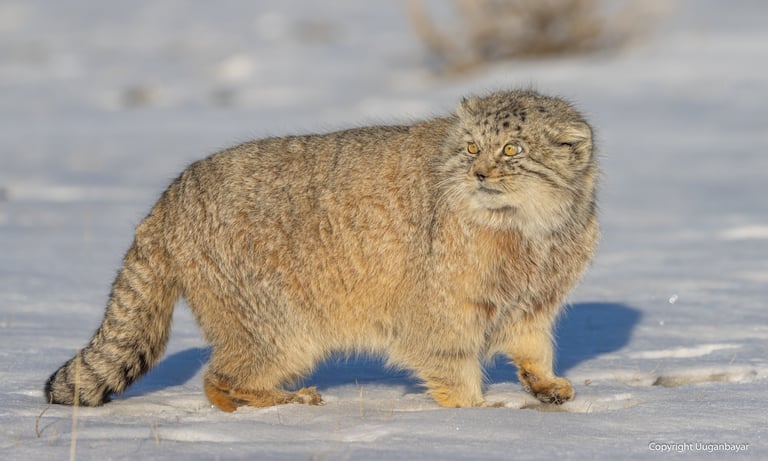
Pallas's cat
Snow Leopard Trip
Gobi Desert Birding Trip, 7 days